Binance Ethereum reserves hit five-year low near 2.9M ETH
CryptoQuant data cited by two outlets puts Binance's ETH balance at roughly 2.9 million, the smallest in almost five years, even as ETH fell to a multi-month low near $1,711. The outflow has two competing explanations.


In this article
Editor’s take (Keshav Aggarwal): I see Binance’s falling ETH reserves as good news: it looks like long-term Ether holders are buying. I’d tell a small investor to start accumulating now, with bitcoin at $62,000 today a great price; for next week, nothing specific—just buy if you believe.
Binance Ethereum reserves have fallen to roughly 2.9 million ETH, the smallest balance in almost five years, according to CryptoQuant data reported separately by crypto.news and BeInCrypto on Sunday. The disclosure landed in the same session that ETH printed a multi-month low near $1,711.
Both outlets cite CryptoQuant analyst Darkfost’s November 15 note. Binance held more than 5 million ETH in July 2025, when Ethereum was approaching $5,000, according to crypto.news; the estimated balance has since fallen nearly 42%. The two reports date the comparison slightly differently: BeInCrypto says holdings were last this low in November 2020, when ETH traded near $400, while crypto.news describes the level as the lowest since 2021.
ETH changed hands at $1,807.65 at 16:20 UTC, down 0.59% over 24 hours and 18.75% over seven days, CoinPaprika data shows. The asset sits 63.44% below its all-time high of $4,946.23 and is down 24.85% over 30 days, with 24-hour volume of $13.7 billion.
Binance Ethereum reserves: what the data actually tracks
CryptoQuant’s figure is an estimate of coins held in wallets the firm attributes to Binance, not a statement about ownership or intent. Reserves have been falling for years. On November 3, analyst Amr Taha put Binance’s balance at 3.08 million ETH as of November 2, down from roughly 4.9 million at the 2025 peak, with tracked exchange reserves across the market at 14.5 million ETH versus nearly 35 million in 2020, according to crypto.news.
One data point cuts the other way. Binance’s own proof-of-reserves snapshot recorded 3,482,001 customer ETH on November 12 against 3,446,090 on November 4 — a gain of 35,911 ETH, or 1.04% — even as customer USDT balances fell by roughly 928.2 million tokens over the same eight days. The update was published outside the exchange’s usual monthly schedule, after Binance said assets affected by the October 29 hack had been replenished.
Reading the outflow: accumulation or relocation
Darkfost’s preferred explanation is accumulation. He said Binance’s 30-day average netflows have stayed negative for much of the period, meaning withdrawals generally exceeded deposits, with holders moving ETH into private wallets or decentralized finance applications as prices fell.
“This sustained trend of net outflows further supports the accumulation hypothesis,” Darkfost wrote, while cautioning that withdrawals do not prove fresh purchases.
Whale activity is offered as supporting evidence. BeInCrypto reported that Lookonchain flagged four Ethereum whales buying the dip, two of them withdrawing straight from exchanges: wallets linked to Erik Voorhees spent $125.27 million on 63,540 ETH at an average of $1,972.7, while sibling accounts spent $60.88 million on 31,484 ETH at $1,933. BeInCrypto notes all four buyers sit roughly 6% to 8% underwater on paper. A separate wallet withdrew 34,601 ETH, worth about $73.75 million, from Binance on November 9 after more than two years of inactivity — confirming the transfer, not a purchase.
The bear case: ETF redemptions and post-hack withdrawals
Reserve declines have a second reading that has nothing to do with conviction. Coins can leave exchange-attributed wallets because they are moved into custody arrangements or pulled for safety after a security incident. BeInCrypto notes some of the Binance outflow may reflect safety withdrawals following the exchange’s $6.3 billion hack in October.
Fund flows point the other way from the accumulation story. Farside Investors recorded about $398.9 million in net outflows from US spot Ethereum ETFs between November 9 and 13, including $184.6 million on Monday, $144.8 million on Wednesday and $70.5 million on Thursday, before a $2.3 million inflow on Friday ended four consecutive negative sessions. Selling has also reached Ethereum Foundation-linked wallets: Onchain Lens reported that an address it tracks as 0x5CBC sold 7,500 ETH over four days for about 14.52 million USDS, the latest leg being 2,500 ETH swapped through CoW Swap for 4.597 million USDS and moved to a multisig Safe.
Neither report supplies derivatives positioning data, so the third leg of the bear case — leveraged selling — is not quantified in the material available here.
How much weight the reserve signal deserves
Neither report publishes a hit rate for the indicator, and the long-run record is mixed at best. Exchange reserves have fallen from nearly 35 million ETH in 2020 to 14.5 million now, a stretch in which ETH still ended up 63% below its peak. The Binance Ethereum reserves data has described a shrinking float, but it has not functioned as a timing tool.
Darkfost’s own framing is conditional: “Over the longer term, a continued decline in exchange reserves could reduce the amount of ETH readily available for sale, potentially creating a more favorable supply environment if demand begins to recover.” That is a supply argument that requires demand to validate it.
Levels traders are watching
Analyst Ted Pillows noted that ETH bounced from its $1,700 to $1,720 support zone and warned that losing it could open a path toward Ethereum’s 2018 highs. Neither report publishes a quantified target below the $1,700-$1,720 floor; the sourced reference points are the $1,700-$1,720 support and, above, Ali Charts’ TD Sequential daily buy signal with a first test near the 200-day simple moving average around $2,150.
The whale entry band of $1,933 to $1,990 sits between spot and that moving average, which means the buyers whose withdrawals underpin the accumulation read are already under water on those positions. CrediBULL Crypto framed the setup as dependent on the wider market: “The setup is here, now we just need $BTC to behave.”
What to watch next
- Proof-of-reserves updates. A second consecutive increase in Binance’s reported customer ETH balance would weaken the self-custody narrative.
- ETF flow direction. A return to the November 9-13 outflow pace would keep supply moving toward the market rather than away from it.
- Bitcoin. BTC traded at $64,609, down 14.55% on the week and 20.35% on the month, with dominance at 56.73%, per CoinPaprika. Total crypto market cap stood at $2.29 trillion, down 1.06% in 24 hours on $159.9 billion of volume.
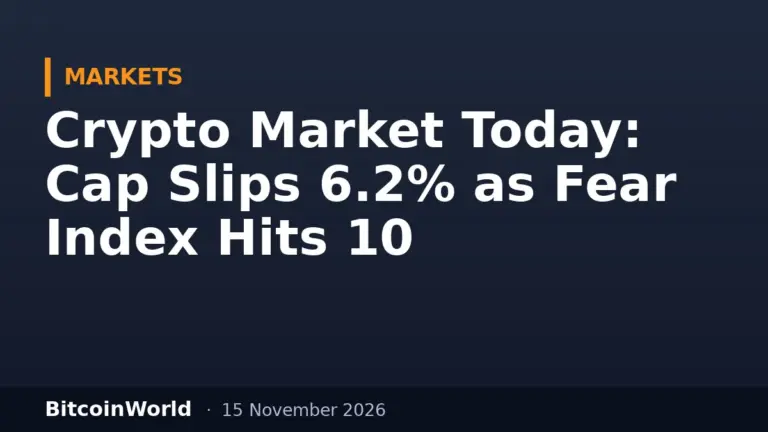
- Sentiment. Alternative.me’s Crypto Fear & Greed Index read 10, “Extreme Fear,” down from 13 the previous day.
The bullish read is validated if the $1,700-$1,720 zone holds and ETF outflows slow while exchange balances keep shrinking. It is invalidated if that support breaks or if reserves rebuild in the next attestation.
Frequently asked questions
What are Binance's Ethereum reserves now?
CryptoQuant data cited by crypto.news and BeInCrypto puts Binance's ETH balance at roughly 2.9 million, the lowest in almost five years, down nearly 42% from more than 5 million ETH in July 2025.
Do falling exchange reserves mean ETH is being accumulated?
Not necessarily. CryptoQuant analyst Darkfost says withdrawals do not prove fresh purchases. Coins may be moved to self-custody or DeFi yield strategies, but outflows can also reflect custody moves or safety withdrawals after Binance's October hack, and US spot Ethereum ETFs recorded about $398.9 million of net outflows between November 9 and 13.
Which ETH levels matter for the bullish read?
Analyst Ted Pillows points to the $1,700-$1,720 support zone, warning that losing it could open a path toward Ethereum's 2018 highs. On the upside, Ali Charts flags a TD Sequential daily buy signal with a first test near the 200-day simple moving average around $2,150.
Sources: crypto.news, BeInCrypto
Keshav Aggarwal
Keshav Aggarwal is the Co-Founder and Responsible Editor of BitcoinWorld, a publication covering crypto, AI, and forex markets since 2020. A blockchain investor and trader with over six years in the digital-asset space, he built one of India's most active crypto investor communities and has guided thousands of retail participants through their first investments in the asset class. At BitcoinWorld, he sets editorial direction across the newsroom and reports on the business of crypto, AI, and Web3 - tracking the funding rounds, product launches, and regulatory shifts shaping the future of finance and frontier technology.